Remembering Richard Eales (1949 – 2026)
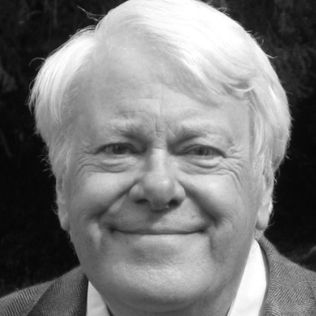
The Howard Staunton Society is deeply saddened by the sudden and totally unexpected death of Richard Eales, who died on 10 November 2026, just two days after his 77th birthday.
Richard was a distinguished medievalist and one of the world’s leading chess historians, whose life brought together two of the great subjects of the Howard Staunton Society: the intellectual and cultural history of chess and the wider history of Britain. For the Society, Richard was much more than an eminent scholar. He was a valued member and, at our 2025 revival dinner, an important contributor to the evening, delivering a memorable address on Howard Staunton and his profound intellectual and cultural significance. His presence brought an unusual depth of scholarship to an occasion devoted to celebrating Staunton’s place in British cultural history.
Richard Geoffrey Eales was born on 8 November 1949 in Grappenhall, Cheshire, and developed an exceptional talent for chess at an early age. He won the British Under-16 Championship in 1966 and the British Under-21 Championship in 1969. He subsequently represented Christ’s College, Cambridge, in the annual Varsity Chess Matches against Oxford on three occasions between 1970 and 1972. He came equal second in the 1970 British Championship, was recognised as a FIDÉ Master in 2002, and represented England in international matches, where he counted Alexander Beliavsky as one of his victims.
His achievements at the board were ultimately only one part of a remarkable intellectual career. Richard studied History at Cambridge University between 1968-74 and then lectured at the University of East Anglia (1974-76). He moved to a permanent post at the University of Kent in 1976, where he served as Head of History and retired in 2004. In retirement, he taught for the History Department at Canterbury Christ Church University, where my sister Jackie, Richard’s wife, was a Professor of History. He was also a Fellow of the Society of Antiquaries, a leading member of the Castle Studies Group and a trustee of Canterbury Archaeological Trust. His research centred on two main interests — castles, politics and the nobility in the Middle Ages, and the history of chess and other games — seeking to place both of them in their social and cultural contexts. His teaching encompassed subjects extending from the Norman Conquest and the Angevin Empire to the Wars of the Roses. His knowledge of the castles of Kent — including Canterbury, Rochester and Dover — became an important part of his contribution to medieval studies. He also travelled extensively to study historic fortifications in France and the Middle East, including sites in Syria and Lebanon which have since become inaccessible or seriously threatened.
Richard’s publications reflected this breadth of scholarship. Among them were an Introduction to the Alecto Press Facsimile edition of Domesday Kent (1992), and his contributions to Canterbury and the Norman Conquest 1066-1109 , which he edited with Richard Sharpe (1995) and Family and Dynasty in Late Medieval England , which he edited with Shaun Tyas (2003).
He enjoyed talking to local history societies in Canterbury and Kent and at conferences across the UK as well as in Ireland, Denmark, France, Germany and Poland. He was a contributor to the prestigious Chateau Gaillard Actes du Colloque and to the International Board Games Studies . He was also the author of the English Heritage Guide to Peveril Castle.
Yet, to us, Richard’s contribution to chess history may ultimately prove to be his most widely remembered legacy. In 1985, he published Chess: The History of a Game (B. T. Batsford and reprints), a work which attempted something extraordinarily ambitious: to tell the story of chess from its origins in the East, through its medieval development and Renaissance transformation, to the emergence of modern international chess. Richard was particularly interested not merely in moves, openings and champions, but in why people played chess, who played it, and how the social meaning of the game changed.
His treatment of chess therefore placed the game within the broader historical context of society and culture. The importance of that approach has been recognised by later chess historians. His research into the social ethos of chess — alongside its technical development and great personalities — continues to be cited in serious scholarship on the history of the game. Chess: The History of a Game has become a classic of chess literature.
Richard had also written about chess much earlier. His 1973 work Alekhine’s Defence (B.T.Batsford) was one of his first published contributions to chess literature, demonstrating the combination of chess expertise and scholarly discipline that would characterise his later work. His win against Povah with this favourite weapon is included in this tribute. Richard also wrote the definitive history of Cambridge University chess, a volume that I particularly relished, since it contains so many of my wins against, among others, representatives of Oxford University.
There was, therefore, a remarkable symmetry to Richard’s life. He was simultaneously a historian who understood chess and a chess player who understood history. He could approach the game as a player, but also as a historian asking what chess tells us about the societies that created, played and transformed it. That perspective made him a particularly fitting member of the Howard Staunton Society.
Howard Staunton himself stood at precisely that intersection: chess player, writer, intellectual, public figure and cultural commentator. Richard understood that Staunton’s importance extended far beyond the moves of the games he played. He understood chess as part of Britain’s intellectual and cultural history — and it was this wider perspective that made his contribution to the Society so valuable.
Richard’s involvement with the chess world was also a deeply personal one. As Jackie Keene, his wife played for the English Girls Chess Team as a junior. Richard was therefore not only a colleague and fellow historian within the Society’s wider intellectual circle, but also part of a family with an extraordinary connection to British chess.
The loss of Richard will be felt particularly keenly by those who knew him as a scholar and colleague. A recent tribute from the Castle Studies Trust described him as a leading British castellologist and expert on the history of chess, remembering him as someone who was “always good company”, able to communicate complex arguments with exceptional clarity, and — perhaps most importantly — kind and generous to fellow academics. Those qualities are worth remembering. Scholarship is not only measured in books and lectures, but also in the generosity with which knowledge is shared and in the encouragement given to others. Richard Eales brought both qualities to his work.
The Howard Staunton Society extends its deepest condolences to Professor Jackie Eales, to Richard’s family, friends, colleagues, and former students, and to all those in the worlds of medieval history, castle studies, and chess, who knew and admired him.
Richard’s contribution to chess history, medieval scholarship and the understanding of Britain’s cultural heritage is a lasting one. His memory will also remain part of the story of the Howard Staunton Society, whose members were privileged to hear his scholarship and share his company.
Richard is survived by his wife Jackie — also a distinguished historian — his sister Elizabeth, his son Robert and his step-children, Alastair and Katie, his nieces Marina and Zoe, nephew Alexander, as well as his many grandchildren.